Assort + Nextech announce strategic partnership →



increase in new patient visits
reduction in after-hours calls
reduction in last-minute cancellations and no-shows
missed emergent-triage transfers

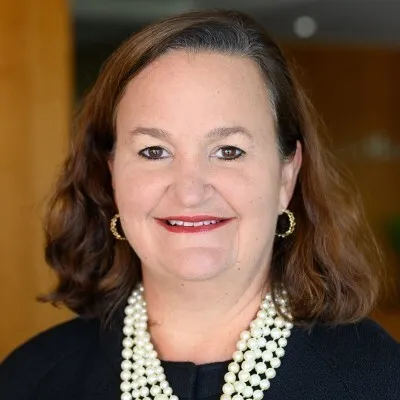

Family Practice Associates of Lexington (FPA) is a 21-provider independent practice in Lexington, Kentucky, spanning family medicine, internal medicine, pediatrics, and behavioral health. Independent for more than 40 years and one of Veradigm's earliest adopters, FPA has worked with Assort Health for over a year. In August 2026, Veradigm named Assort its App of the Month and recognized it as a Platinum Connect Partner, and FPA CEO Kathy Love joined Assort's Maya Raman for a live webinar, “The Monday Morning Fix,” to walk through what changed.
For Kathy Love, CEO of Family Practice Associates of Lexington, patient access is a growth strategy. That means the Monday morning phone problem was never just a service issue: it was a ceiling on how much the practice could grow.
FPA averages 225,000 incoming calls a year. Mondays were the worst of it: long hold times, 50-plus abandoned calls a day, and a team of schedulers that felt overwhelmed.
“We had long hold times, and dropped calls because people didn't want to wait on hold. Those were missed opportunities and just a lot of stress for our staff,” said Love.
The bigger problem was underneath the daily chaos. A handful of veteran staff, several nearing retirement, held the practice's entire scheduling logic in their heads: which provider took new patients, which visit types needed which slots, and the nuances of how each of the 21 providers preferred their day to be organized. Losing any of these tenured staff is risky: it would take months to train someone new, and there'd be no guarantee of the same accuracy for patients in the meantime.
“We knew that when they retired, those people with all the rules in their head and all the nuances of the practice, we'd have to hire two to three people and train them for months and months in order to get the same result for our patients,” Love said. “We did not have a strong plan to effectively transition our team over time.”
FPA had also already tried to fix this once before with a different self-scheduling vendor, and ended up rolling back the product. New patients landed in slots reserved for established patients. Visit types didn't match appointment lengths. The rules that worked over the phone didn't carry over online, so patients still hit friction and staff still cleaned up the mess by hand.
FPA’s Veradigm Practice Management system remained the system of record for provider availability, appointments, and patient records. During implementation, FPA and Assort documented the scheduling logic for all 21 providers, and Synapse translated that practice-specific information into detailed workflow specifications for the agent. During a call or online request, Assort’s agent checks availability in Veradigm, applies FPA’s scheduling logic, books the appointment, and records the appointment note back in Veradigm. Staff continue working in the same system, without reconciling a second record or re-entering the outcome by hand.
That matters for staffing as much as accuracy. Because appointments and their accompanying notes are recorded in Veradigm, FPA did not need to train front-desk employees on a separate system for day-to-day scheduling work.
To get live, FPA and Assort documented all 21 providers' scheduling logic up front, tested the agent adversarially before trusting it with live calls, and rolled it out to patients in stages, not all at once, with a deliberate education push introducing “Sophie” by name before patients needed to rely on her. In total, FPA signed with Assort and was through testing and live, inbound and outbound, within two months.
What began with Sophie on inbound calls grew into a broader patient access strategy. FPA expanded with Assort to include an outbound rescheduling workflow for its “bump list,” an online direct-scheduling form, and a website chatbot. These options let patients reach the practice in the way they prefer, while the same provider-, appointment-, and location-specific scheduling rules create a consistent experience across channels. By consolidating these patient access workflows with one vendor, FPA also reduced the number of disconnected systems its staff had to manage.
With Assort, FPA then added a “Schedule” button to its Google Business Profile, putting scheduling directly in front of patients searching for the practice.
.gif)
“I love the button so much I put it in my big group chats. ‘If you need to schedule, here's the link to schedule with us,’” Love said.
With fewer steps between finding FPA and booking an appointment, patients can get to care without having to call the office first.
FPA and Assort are now designing outbound referral automation together, with Love acting as a design partner shaping how the workflow should handle the practice's referral volume, extending the same rules-based approach to the six-person team that currently manages outbound referrals by hand.
By making it easier for patients to get care, FPA turned a major phone headache into steady practice growth. FPA saw a 30%+ surge in new patient visits, fewer no-shows, and a drop in unnecessary ER visits—all without hiring additional schedulers. By rolling out AI agents for patient access FPA saw:
30%+ Increase in new patient visits since launching online self-scheduling
50% Reduction in after-hours calls to the on-call provider
20% Reduction in last-minute cancellations and no-shows
~3% Reduction in avoidable ER visits
Zero Missed emergent-triage transfers since go-live
Most independent practices face the same risk Kathy did: a few veteran employees hold all the scheduling rules in their heads. Turning that hidden knowledge into an automated system solved FPA's staffing bottleneck and gave the team breathing room. At the same time, it unlocked clear, practice-wide growth.
Patients are booking more, and booking themselves. Since launching the online scheduling form, new patient visits are up more than 30%, concentrated in online bookings, with FPA surfacing its Schedule link across its website, Google Business listing, and every social post.
Fewer after-hours calls reach the on-call provider. Providers previously fielded six to eight after-hours calls a night, more on weekends. With Sophie handling scheduling and rescheduling around the clock, on-call volume is down roughly 50%, and the practice has seen a reduction in avoidable ER visits of about 3% as patients get next-day appointments instead of heading to urgent care.
Cancellations and no-shows dropped. Patients can reschedule with Sophie anytime instead of forgetting or missing the window to call, cutting last-minute cancellations by about 20%.
Staff couldn't out-schedule her. "Most people would tell you that Sophie is more accurate," Love said. "The clinical staff doesn't know. They couldn't tell you what was scheduled by Sophie versus a human." That accuracy freed the front desk to focus on complex, high-touch calls instead of routine booking.