From Touchpoints to Relationships: Introducing Continuous Patient Conversations

,

June 18, 2026

Every time a patient calls, they start from scratch. Assort’s Continuous Patient Conversations changes that: chatbot, two-way texting, patient intake, and Patient Journey Memory that builds context across every interaction, so patients never have to repeat themselves again.

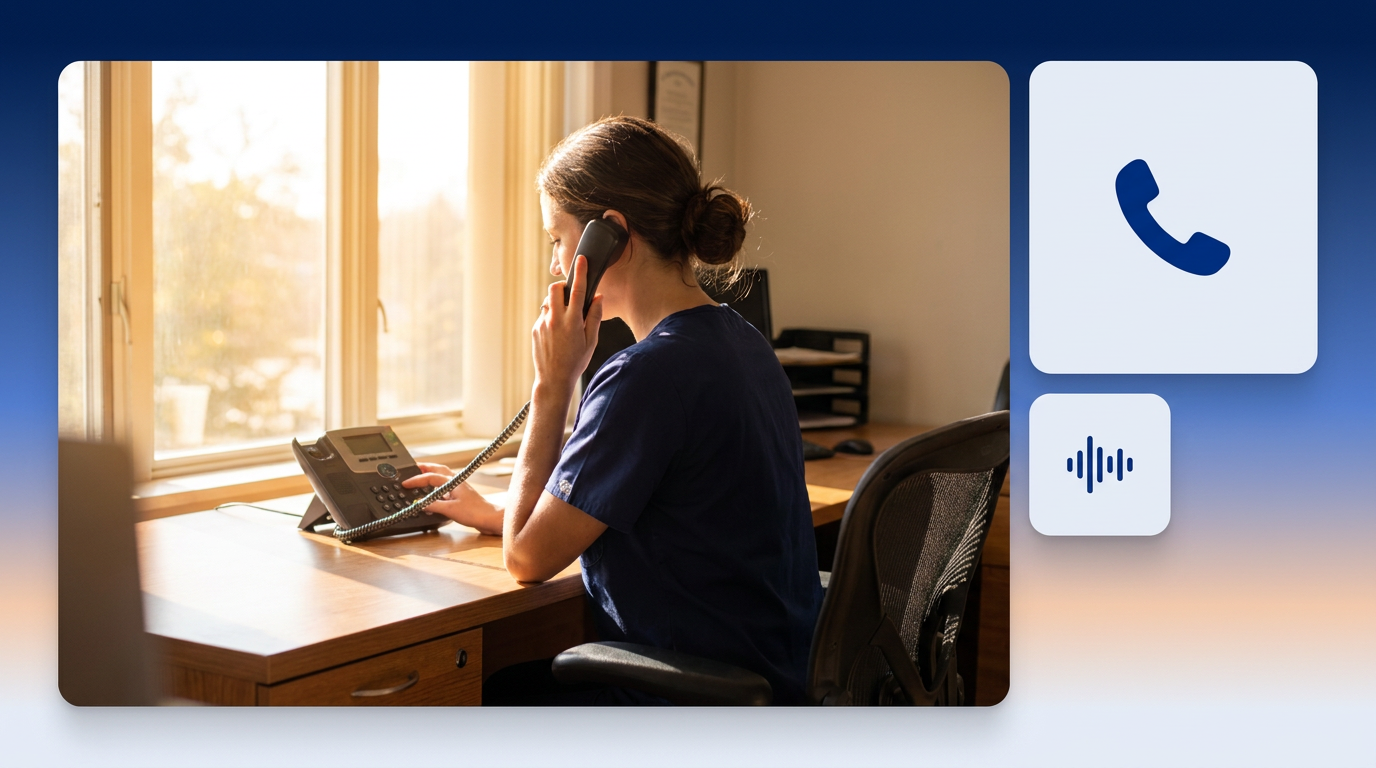
Consider a patient, Mrs. Perez, who calls to reschedule a physical therapy appointment. Instead of a generic greeting and a round of confirming details she's already shared, the agent greets her in Spanish, surfaces an appointment time during the morning in the first half of the week based on her history, and notes her prescription that will be due for a refill soon. It doesn't feel like a system. It feels like someone who knows her.

It also works across sessions. If Mrs. Perez started scheduling earlier that week through the chatbot and dropped off before finishing, the agent picks up exactly where she left off: "I see you were in the middle of scheduling a physical therapy follow-up. Would you like to continue?" There's no starting over, and no re-entering what the system already captured.

And it works across pending tasks. When a patient calls in to schedule, the agent checks whether they're enrolled in any active outbound campaigns in the same call: a rescheduling request, outstanding intake forms, or a referral follow-up. With just one interaction, you're able to close out multiple open items. That means fewer outbound attempts that go unanswered and less manual follow-up for staff.

The Next Frontier in Patient Access

Specialty care practices and health systems are under pressure from every direction: higher patient volumes, rising labor costs, staffing shortages, and patients who expect more from every interaction. Phone-first, staff-dependent operations weren't built to handle all of this at once.

The result: patients who repeat themselves every time they call, interactions that feel impersonal, and staff stretched so thin that the obvious response seems like the only response: just hire more people. 

The answer isn't hiring more staff. That only compounds the cost problem. And as long as continuity depends on a person remembering, manually looking things up, and piecing together context, it will always be fragile. Practices need a system that holds the patient relationship together: one that's continuous, contextual, and always on so that patients never have to tell their story twice. 

Over the past few years, healthcare practices have made real progress by putting AI to work on the front desk. Deploying AI agents to answer patient calls, handle appointment scheduling, and proactively reach out to patients has unlocked meaningful gains in operational efficiency, labor capacity, and the patient experience. The opportunity was significant, and the practices that moved early have seen the results.

But as practices adopt Voice AI capabilities to support those patient interactions and get appointments scheduled, a new question has emerged: what happens behind the scenes to make sure each interaction is handled correctly and your staff is ready for every appointment? Patients don't experience their care as a series of isolated touchpoints. They experience it as a relationship with a practice, and right now, the systems underneath that relationship weren't designed to reflect that. Every channel operates independently, context resets with each interaction, and the work of maintaining continuity still falls on staff.

Introducing Continuous Patient Conversations

The next step is building the infrastructure that changes that: a connected system where every channel, every interaction, and every patient preference builds on the last. That's what we're doing with Continuous Patient Conversations, and it's how we’re building the foundation for the future of AI-guided patient care.

Continuous Patient Conversations is about giving practices a better way to deliver meaningful, personalized interactions at every step of the patient journey, while automating more of the work that typically falls on staff. These capabilities expand the ways patients can reach your practice, ensure the right information is captured before they arrive, and make every interaction feel like a continuation of the last rather than a fresh start.

More Ways to Connect: Chatbot and Two-Way Texting

Patient access only works if patients can actually reach you, on their terms and on their timeline. For most practices, the phone is still the primary channel, which means missed calls, hold times, and patients who disengage before they ever get what they need.

Assort's Chatbot extends inbound AI from Concierge beyond answering phone calls and self-service scheduling to now responding to patient inquiries via web chat. Every workflow available by phone is now available on your practice's website, 24/7, with no wait times. Patients can schedule appointments, manage requests, get answers to common questions, and more, all handled by the same AI agents that power Assort's voice experience. The platform is powered by Assort Synapse, which draws on 180M+ patient interactions and 62,000+ care automation protocols to handle specialty complexity with precision from day one.

Two-Way Texting also extends the patient outreach capabilities in Activate, allowing your staff to follow up on automated, AI agent-led outreach in a faster, more natural way. 
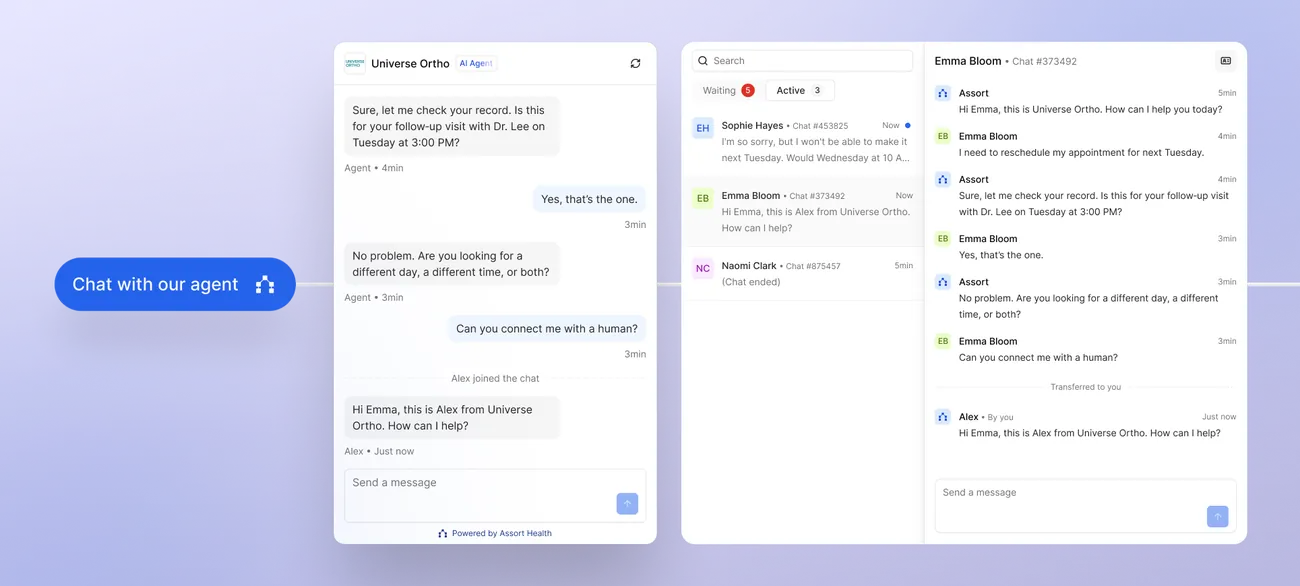
Beyond follow-up, Activate’s AI agents run the full outbound campaign lifecycle autonomously: proactive scheduling, appointment reminders, care gap outreach, and reschedule campaigns, across call and text, with no manual dialing. One example: when a patient has an open referral, the AI agent reaches out to get them scheduled, without a staff member having to work the referral queue.

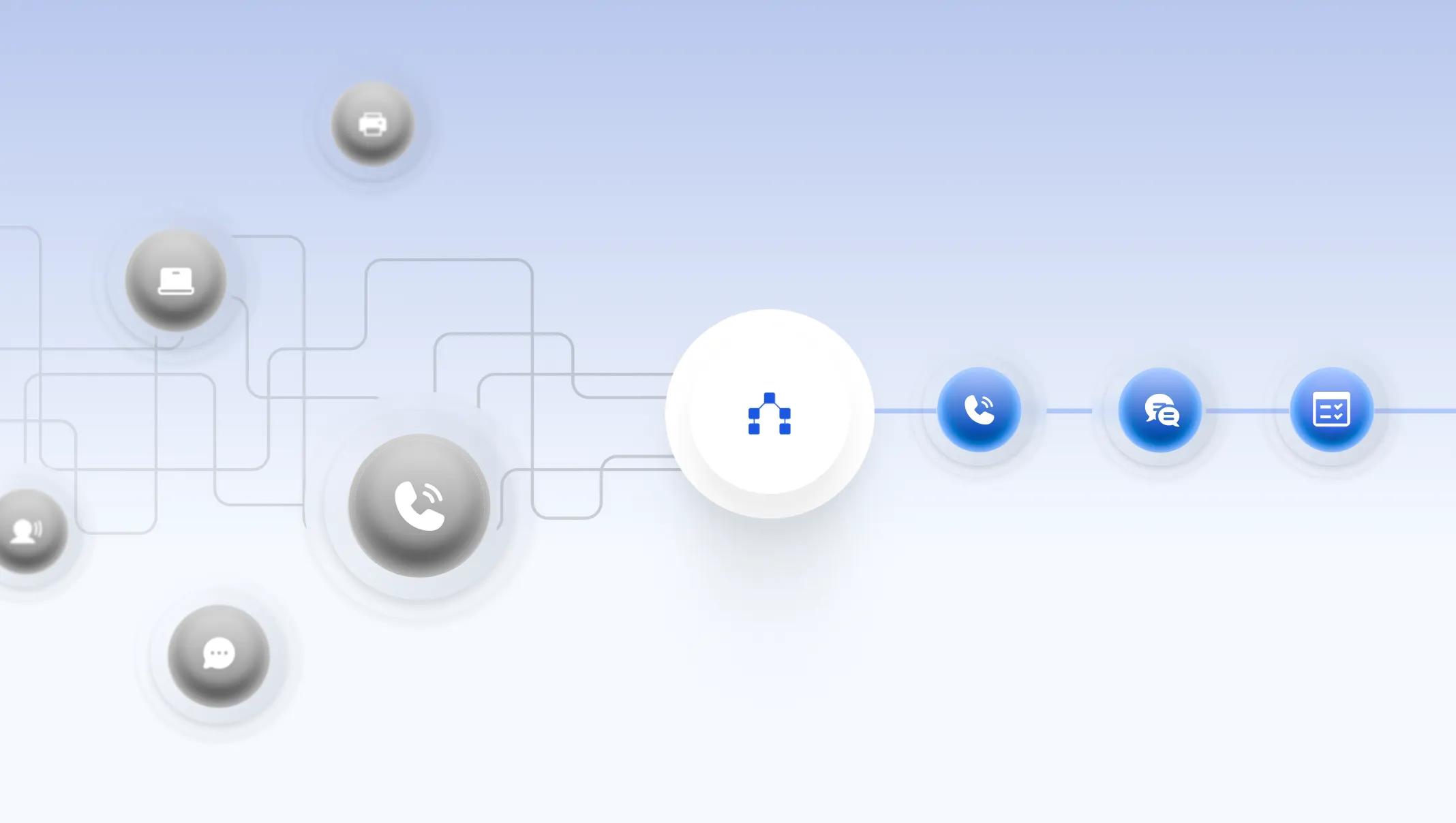
These are a natural extension of patient access, not separate tools filling gaps in the patient journey. They run on the same agents, draw from the same patient context, and feed back into the same record. A conversation a patient has via chatbot on Monday informs the follow-up text they receive on Thursday. More channels, without more complexity.

The Relationship Starts Before the Appointment: Patient Intake

A patient's experience with your practice doesn't begin in the exam room. It begins the moment they reach out to schedule, and everything that happens between that first interaction and their appointment shapes their perception of your practice before they walk through the door. Your intake process is a big part of that. If it’s complicated for them to provide their information, or their appointment is delayed because they have to fill out multiple forms onsite, it creates friction before their care even starts. 

Eighty percent of patients who switch providers say it’s due to friction when trying to navigate care, like inadequate digital access, according to the American Hospital Association.

Now, with Patient Intake, Assort can proactively reach patients ahead of their appointments to collect what your practice needs, digitally and automatically. And because Assort already knows these patients from prior calls, forms, and interactions across its products, intake forms arrive pre-populated with what the system already has on file. 

Patients aren’t re-entering information from scratch; they’re confirming it. That’s a meaningfully faster, less frustrating experience, and it’s why completion rates are higher. The hard part is already done. Insurance verification happens before a patient arrives to improve first-pass claim approval rates, and your staff isn't chasing down paperwork on the day of the visit.
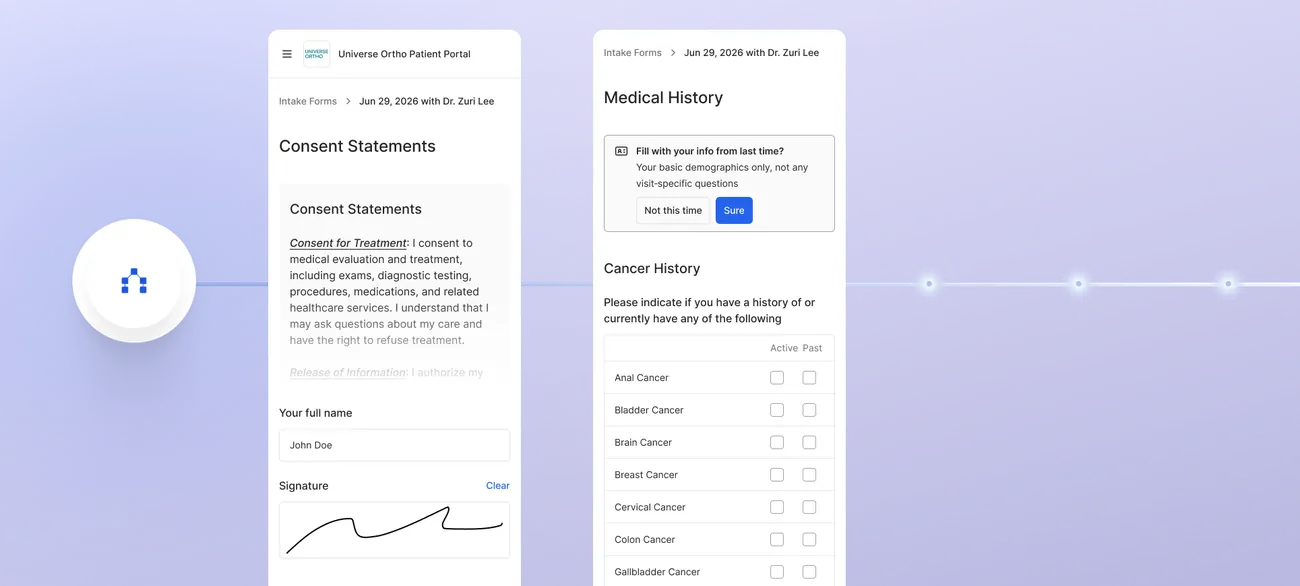
That moment of engagement is also an opportunity to surface care that would otherwise fall through the cracks.When a patient is completing forms for a women’s health visit, the system can flag that she’s due for a mammogram and prompt scheduling in the same interaction. The patient is already there, already engaged, and the practice captures a visit it might never have had the chance to offer. The result: Better preventive care for the patient, and revenue from appointments that would otherwise have gone unscheduled. 

But the meaningful impact comes from the fact that this isn’t a standalone intake tool; it's integrated into Assort’s platform that spans the entire patient journey. The patient data captured writes directly into your EHR and carries forward into every interaction that follows.

Patient Journey Memory: Providing Every Patient with a Personal AI Agent

Most patient interactions today start from scratch. The AI agent or staff member on the other end knows only what's in front of them, and the patient fills in the rest. 

Patient Journey Memory changes that by building a longitudinal profile with every interaction: preferred language, communication style, scheduling patterns, and more. The schema tracks preferred language and voice speed, so a patient who speaks Spanish or asked an agent to slow down doesn’t have to ask again. It tracks engagement windows, so outbound campaigns reach patients when they’re actually responsive, not just when the default cadence fires. It tracks scheduling preferences, so the agent can lead with the provider and time slot a patient has historically chosen rather than asking open-ended. And it logs every prior interaction across every channel, so nothing a patient has already communicated ever needs to be said twice. 

Memory requires both breadth, with multiple channels and types of interactions feeding the same record, and depth, with longitudinal data building over time. A point-solution intake vendor can’t build it because they can only see one slice. A bolt-on chatbot can’t build it because the context dies at the channel boundary.

It's what let Mrs. Perez's agent greet her in Spanish, pick up the chatbot session she'd left unfinished, and note her upcoming refill. No single channel could hold all of that. The shared record could.

That level of continuity was previously only possible when a patient had a long-standing relationship with a specific staff member. Patient Journey Memory makes it the default: delivered consistently, across every channel, at any volume. And because it compounds with every interaction, the longer a practice is on Assort, the better Assort knows your patients, in a way no single-channel tool can replicate.

The Patient Care Journey, Guided by AI Agents

Together, these capabilities close a gap that most practices don't have a good answer for today. Patients have more ways to reach your practice, a smoother experience from their very first interaction, and conversations that feel personal regardless of which channel they use or how long it's been since their last visit. Staff spend less time chasing down information, filling gaps between interactions, and serving as the connective tissue holding the patient journey together. And because Patient Journey Memory spans all of it, every new interaction makes the next one better, and patients never tell their story again.

The vision behind our latest release is a future where AI agents guide patients through every step of their care journey, proactively and with full context, so that every interaction feels less like navigating a healthcare system and more like being taken care of. 

Continuous Patient Conversations is our first step toward that future, and the practices that invest in this foundation now won't just be better equipped to handle volume. They'll have something more valuable: patient relationships that get stronger over time, and the trust that comes with them. The case for moving fast and for building the right foundation usually pull against each other. Continuous Patient Conversations is what it looks like when they don't.

Vincent Yeh
Latest blogs

Latest Blogs

From Touchpoints to Relationships: Introducing Continuous Patient Conversations

Vincent Yeh

June 18, 2026

Consider a patient, Mrs. Perez, who calls to reschedule a physical therapy appointment. Instead of a generic greeting and a round of confirming details she's already shared, the agent greets her in Spanish, surfaces an appointment time during the morning in the first half of the week based on her history, and notes her prescription that will be due for a refill soon. It doesn't feel like a system. It feels like someone who knows her.

It also works across sessions. If Mrs. Perez started scheduling earlier that week through the chatbot and dropped off before finishing, the agent picks up exactly where she left off: "I see you were in the middle of scheduling a physical therapy follow-up. Would you like to continue?" There's no starting over, and no re-entering what the system already captured.

And it works across pending tasks. When a patient calls in to schedule, the agent checks whether they're enrolled in any active outbound campaigns in the same call: a rescheduling request, outstanding intake forms, or a referral follow-up. With just one interaction, you're able to close out multiple open items. That means fewer outbound attempts that go unanswered and less manual follow-up for staff.

The Next Frontier in Patient Access

Specialty care practices and health systems are under pressure from every direction: higher patient volumes, rising labor costs, staffing shortages, and patients who expect more from every interaction. Phone-first, staff-dependent operations weren't built to handle all of this at once.

The result: patients who repeat themselves every time they call, interactions that feel impersonal, and staff stretched so thin that the obvious response seems like the only response: just hire more people. 

The answer isn't hiring more staff. That only compounds the cost problem. And as long as continuity depends on a person remembering, manually looking things up, and piecing together context, it will always be fragile. Practices need a system that holds the patient relationship together: one that's continuous, contextual, and always on so that patients never have to tell their story twice. 

Over the past few years, healthcare practices have made real progress by putting AI to work on the front desk. Deploying AI agents to answer patient calls, handle appointment scheduling, and proactively reach out to patients has unlocked meaningful gains in operational efficiency, labor capacity, and the patient experience. The opportunity was significant, and the practices that moved early have seen the results.

But as practices adopt Voice AI capabilities to support those patient interactions and get appointments scheduled, a new question has emerged: what happens behind the scenes to make sure each interaction is handled correctly and your staff is ready for every appointment? Patients don't experience their care as a series of isolated touchpoints. They experience it as a relationship with a practice, and right now, the systems underneath that relationship weren't designed to reflect that. Every channel operates independently, context resets with each interaction, and the work of maintaining continuity still falls on staff.

Introducing Continuous Patient Conversations

The next step is building the infrastructure that changes that: a connected system where every channel, every interaction, and every patient preference builds on the last. That's what we're doing with Continuous Patient Conversations, and it's how we’re building the foundation for the future of AI-guided patient care.

Continuous Patient Conversations is about giving practices a better way to deliver meaningful, personalized interactions at every step of the patient journey, while automating more of the work that typically falls on staff. These capabilities expand the ways patients can reach your practice, ensure the right information is captured before they arrive, and make every interaction feel like a continuation of the last rather than a fresh start.

More Ways to Connect: Chatbot and Two-Way Texting

Patient access only works if patients can actually reach you, on their terms and on their timeline. For most practices, the phone is still the primary channel, which means missed calls, hold times, and patients who disengage before they ever get what they need.

Assort's Chatbot extends inbound AI from Concierge beyond answering phone calls and self-service scheduling to now responding to patient inquiries via web chat. Every workflow available by phone is now available on your practice's website, 24/7, with no wait times. Patients can schedule appointments, manage requests, get answers to common questions, and more, all handled by the same AI agents that power Assort's voice experience. The platform is powered by Assort Synapse, which draws on 180M+ patient interactions and 62,000+ care automation protocols to handle specialty complexity with precision from day one.

Two-Way Texting also extends the patient outreach capabilities in Activate, allowing your staff to follow up on automated, AI agent-led outreach in a faster, more natural way. 

Beyond follow-up, Activate’s AI agents run the full outbound campaign lifecycle autonomously: proactive scheduling, appointment reminders, care gap outreach, and reschedule campaigns, across call and text, with no manual dialing. One example: when a patient has an open referral, the AI agent reaches out to get them scheduled, without a staff member having to work the referral queue.

These are a natural extension of patient access, not separate tools filling gaps in the patient journey. They run on the same agents, draw from the same patient context, and feed back into the same record. A conversation a patient has via chatbot on Monday informs the follow-up text they receive on Thursday. More channels, without more complexity.

The Relationship Starts Before the Appointment: Patient Intake

A patient's experience with your practice doesn't begin in the exam room. It begins the moment they reach out to schedule, and everything that happens between that first interaction and their appointment shapes their perception of your practice before they walk through the door. Your intake process is a big part of that. If it’s complicated for them to provide their information, or their appointment is delayed because they have to fill out multiple forms onsite, it creates friction before their care even starts. 

Eighty percent of patients who switch providers say it’s due to friction when trying to navigate care, like inadequate digital access, according to the American Hospital Association.

Now, with Patient Intake, Assort can proactively reach patients ahead of their appointments to collect what your practice needs, digitally and automatically. And because Assort already knows these patients from prior calls, forms, and interactions across its products, intake forms arrive pre-populated with what the system already has on file. 

Patients aren’t re-entering information from scratch; they’re confirming it. That’s a meaningfully faster, less frustrating experience, and it’s why completion rates are higher. The hard part is already done. Insurance verification happens before a patient arrives to improve first-pass claim approval rates, and your staff isn't chasing down paperwork on the day of the visit.

That moment of engagement is also an opportunity to surface care that would otherwise fall through the cracks.When a patient is completing forms for a women’s health visit, the system can flag that she’s due for a mammogram and prompt scheduling in the same interaction. The patient is already there, already engaged, and the practice captures a visit it might never have had the chance to offer. The result: Better preventive care for the patient, and revenue from appointments that would otherwise have gone unscheduled. 

But the meaningful impact comes from the fact that this isn’t a standalone intake tool; it's integrated into Assort’s platform that spans the entire patient journey. The patient data captured writes directly into your EHR and carries forward into every interaction that follows.

Patient Journey Memory: Providing Every Patient with a Personal AI Agent

Most patient interactions today start from scratch. The AI agent or staff member on the other end knows only what's in front of them, and the patient fills in the rest. 

Patient Journey Memory changes that by building a longitudinal profile with every interaction: preferred language, communication style, scheduling patterns, and more. The schema tracks preferred language and voice speed, so a patient who speaks Spanish or asked an agent to slow down doesn’t have to ask again. It tracks engagement windows, so outbound campaigns reach patients when they’re actually responsive, not just when the default cadence fires. It tracks scheduling preferences, so the agent can lead with the provider and time slot a patient has historically chosen rather than asking open-ended. And it logs every prior interaction across every channel, so nothing a patient has already communicated ever needs to be said twice. 

Memory requires both breadth, with multiple channels and types of interactions feeding the same record, and depth, with longitudinal data building over time. A point-solution intake vendor can’t build it because they can only see one slice. A bolt-on chatbot can’t build it because the context dies at the channel boundary.

It's what let Mrs. Perez's agent greet her in Spanish, pick up the chatbot session she'd left unfinished, and note her upcoming refill. No single channel could hold all of that. The shared record could.

That level of continuity was previously only possible when a patient had a long-standing relationship with a specific staff member. Patient Journey Memory makes it the default: delivered consistently, across every channel, at any volume. And because it compounds with every interaction, the longer a practice is on Assort, the better Assort knows your patients, in a way no single-channel tool can replicate.

The Patient Care Journey, Guided by AI Agents

Together, these capabilities close a gap that most practices don't have a good answer for today. Patients have more ways to reach your practice, a smoother experience from their very first interaction, and conversations that feel personal regardless of which channel they use or how long it's been since their last visit. Staff spend less time chasing down information, filling gaps between interactions, and serving as the connective tissue holding the patient journey together. And because Patient Journey Memory spans all of it, every new interaction makes the next one better, and patients never tell their story again.

The vision behind our latest release is a future where AI agents guide patients through every step of their care journey, proactively and with full context, so that every interaction feels less like navigating a healthcare system and more like being taken care of. 

Continuous Patient Conversations is our first step toward that future, and the practices that invest in this foundation now won't just be better equipped to handle volume. They'll have something more valuable: patient relationships that get stronger over time, and the trust that comes with them. The case for moving fast and for building the right foundation usually pull against each other. Continuous Patient Conversations is what it looks like when they don't.

Vincent Yeh

Latest Blogs